 US Dollar
 Australian Dollar
 Euro
Euro
 CAD
CAD

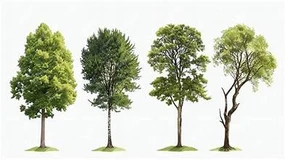
Although "tree" is a common word, there is no universally recognized definition of what a tree is.
As I continue my pursuit in learning about Petrified Wood, I realize that there aren’t a lot of good resources. There are some well-known experts and some so-called experts, some are very helpful and willing to share their expertise and experience, while others aren’t very welcoming to the “newbies”. In any event, a dear friend has graciously offered to teach me more about looking at the wood with a microscope and identifying the type of wood! In order to do that I must take a step back and review more information about trees themselves. So once again I am sharing what I’m learning with you!
Even though the word "tree" is a common word we all know, there is no actual universally recognized definition of what a tree is, not even botanically. In general, a tree is a plant that reaches at least 20 feet in maturity, with an elongated stem, or a woody trunk, formed by secondary growth (meaning that the trunk thickens each year) and usually supporting branches and leaves. Some wider definitions include taller palms, tree ferns, bananas, and bamboos.
All seed plants, including trees are separated into 2 varieties –
Gymnosperms, or softwoods: these include the large category of conifers, as well as cycads, and the more rare ginkgophytes and gnetales. These types of trees all produce seeds that are not enclosed in fruits or nuts, but rather in open structures such as pine cones. They usually have an excurrent form (shaped like a Christmas tree) and are mostly evergreens. Many have tough waxy leaves, such as pine needles. Gymnosperms evolved first on earth and actually have a simpler anatomy then the Angiosperms.
The majority of tree species are the Angiosperms or hardwoods: flowering trees that have their seeds encapsulated in a fruit or a nut. Angiosperms are divided into 2 groups Dicotyledons (hardwood dicots including oak, birch, mahogany, etc.) and Monocotyledons (woody monocots including palms, bamboo, rattan etc.). Dicots usually have a branching form with long trucks and big crowns of both branches and twigs. They have broad leaves and are mainly deciduous, shedding their leaves at the end of the growing season and then having a dormant period without foliage. Because Angiosperms have a more complex cell structure they actually are easier to identify.
Trees have generic names such as birch, oak, fir and then have more specific names such as golden oak, white birch, or douglas fir. Latin is used for scientific names with the first word capitalized and representing the generic name (fir) and the second word representing the more specific variety (noble) and these names are usually italicized- Abies procera=noble fir.
A tree typically has many branches supported by the trunk, which contains woody tissue for strength, and vascular tissue to carry materials from one part of the tree to another. For most trees the trunk is surrounded by a layer of bark, which is not wood and most say does not petrify, but it serves as a protective barrier for the live tree. Below the ground, the roots spread out widely; they serve to anchor the tree and extract moisture and nutrients from the soil. Above ground, the branches divide into smaller branches, twigs and shoots. The shoots grow leaves, which capture light energy and convert it into sugars by photosynthesis, providing the food for the tree's growth and development.
The xylem, or vascular system in angiosperms and tracheid system in most gymnosperms, allows water, nutrients and other chemicals to be distributed throughout the tree, and without it trees would not be able to grow as large as they do. Tracheids in gymnosperms and the vessel elements and vessels in angiosperms are distinguished by their shape; tracheids are long and narrow, vessel elements are shorter, and are connected together into long tubes that are called vessels. A chief distinction between the two kinds of wood is the absence of vessels in the gymnosperms (except in Gnetales) and their presence in most angiosperms. In trees and other plants that develop wood, the cambium cell layer is what allows the expansion of tissue that produces woody growth. The xylem is between the cambium and the pith (center or heart of the tree). The older xylem is heartwood that provides structural support and the younger xylem is called sapwood and it is what transport the much-needed water. Division in the cambium creates new cells. As these cells develop, they assume different sizes and shapes and perform various functions in the tree.
Some of the cells will elongate and run perpendicular to the concentric growth rings; from the bark to the pith. These flattened ribbons of tissue are called rays. These can vary significantly in tree species and are very helpful in identifying the type of tree.
As the tree expands, it develops the growth rings. The ‘early wood’ typically grows first in the spring, when the tree first comes out of hibernation and it forms lighter bands with distinct pores (softwoods do not have pores). Pores usually appear as dark spots in the wood. The “late wood” is denser and darker in color. The faster the tree grows, the wider the late wood bands are. Softwoods tend to grow faster than hardwoods.
To find out more about how trees become stone check out What is Petrified Wood?
In a future blog (and once I learn more!), I will go into more depth of the tracheids, vessels, cells, pores, rays etc. that I will be looking for in my microscope and how they will help me identify the types of woods!
Thanks for reading and happy hunting!