 US Dollar
 Australian Dollar
 Euro
Euro
 CAD
CAD

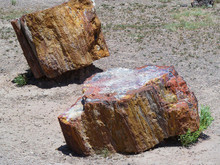
Petrified Wood is found all over the world.
Countries with well-known petrified wood deposits include: Argentina, Australia, Belgium, Brazil, Canada, China, The Czech Republic, Germany, Ecuador, Egypt, Greece, India, Indonesia, Italy, Libya, Madagascar, New Zealand, the Ukraine, the United Kingdom.
And, of course, the United States. Petrified Wood has also been found in every state in the U. S. In fact, Petrified Wood continue to be found and collected throughout the United States. Much of it in small chunks or in brown colors. But the most colorful and striking Petrified Woods primarily come from the western half of the United States.
Since educating myself about the collection of Petrified Wood we recently acquired, and since the wood in the collection is all from the United States, I am going to concentrate here on notable American Petrified Wood areas.
When a large amount of petrified wood is found in one area, the area is often referred to as a “Petrified Forest”. The trees may have actually at one time grown there or they may have ended up there when moved by volcanic eruption, mudslides, or flooding. In the vast majority of these areas, removal of fossil wood is now protected by National Park or Monument status. You may collect rocks on most federal government lands except National Parks, National Monuments, Indian Reservations, wildlife refuges, wilderness areas, military reservations, reclamation projects, or any other withdrawn areas. In most states, the BLM sets collection limits for personal use only as up to 25 pounds per day, plus one piece, with a total limit of 250 pounds per year.
To learn more about What is Petrified Wood?
ARIZONA:
The most important find in the world of Petrified Wood is in Northern Arizona. Known simply as The Petrified Forest, the area became a national monument in 1906, and was later designated a national park in 1962. Here Petrified Wood tree trunks as large as 213 feet long have been found. No collecting is allowed in the park, but wood is still today found and collected on surrounding private property.
Petrified Wood found in the Petrified Forest come from the Chinle Formation and are from the Late Triassic Period around 200 million years ago.
The lack of rings in Arizona wood is due to a tropical climate with very few changes in temperature The vast amount of wood found here is Arucarioxylon arizonicum (Auracaria), an extinct type of conifer tree. Though some rarities such as Schilderia adamanica and Woodworthia arizonica also are found here.
Arizona wood is often called Rainbow Wood and is known for its vibrant colors, from reds to yellows, caused by impurities in the quartz, such as iron, carbon, and manganese.
NEVADA:
Cherry Creek, White Pine County, northeastern Nevada- known for pinks, reds, and white woods with well-preserved, although compressed, wood structure. From the Kalamazoo Creek Tuff Formation, Oligocene epoch.
Hubbard Basin, Elko County, northeastern Nevada- Wood is relatively scarce from this region, but it is some of the best agatized wood to be found. It is known for white-blue sometimes translucent chalcedony with beautiful reds, oranges, blues, yellows or dark brown. Most specimens from this location are petrified spruce trees or larger conifers with excellent growth ring preservation. It is from the Miocene epoch - 6 to 22 million years old.
OREGON:
Crooked River-famous for green and pink limb cast found in the South Fork of the Crooked River within the John Day Formation, Oligocene epoch.
Grassy Mountain- Grassy Mountain is a remote high-desert rockhounding destination in Malheur County, near Owyhee Lake, Oregon and is well-known for the excellent quality of petrified wood. The Succor Creek Formation of southeastern Oregon is from the Middle-Miocene epoch, about 12.5 million years ago. For over a century, permineralized remains of stumps, logs, and branches have been recovered from several localities near Grassy Mountain.
Hampton Butte- known for beautiful petrified wood in shades of green, red and orange. In the Clarno Formation, late Eocene epoch, approximately 34 to 56 million years ago. Some of the petrified wood here was buried shallow and often formed limb casts as the wood decayed before the minerals filled the partially empty void left. The pieces that show the original wood growth structure were buried slightly deeper or otherwise sealed away from oxygen more effectively, allowing them to petrify and preserve the wood characteristics. The petrified wood is primarily from ancient coniferous trees, but Hampton Butte has bald cypress, cypress, laurel, magnolia, oak, pine, Sequoia, and sycamore.
McDermitt-the McDermitt area is a desolate sagebrush desert that spans over 100 square miles on the Oregon/Nevada border. It is in the Trout Creek Formation, Miocene epoch. McDermitt woods tend to be highly silicified with well-preserved wood structure.
Swartz Canyon- Swartz Canyon is situated in the southeastern part of Oregon, within the larger region of the John Day Fossil Beds National Monument. The petrified wood in Swartz Canyon dates back to the late Miocene epoch, approximately 20 million years ago and comes from the Painted Gorge Basalt Formation. Swartz canyon has produced some of the finest petrified oak woods ever found. Swartz Canyon petrified wood is usually a red and chocolate brown color combination and the petrified wood is very highly agatized! Sometimes a black oak wood is found here.
Stinking Water – Perhaps Oregon's most famous petrified wood deposit. The Stinking Water area is in the same Columbia Plateau that produces most of the Washington wood areas, this wood dates from middle Miocene through Pliocene epoch 12.1 million years ago. Woods found here include alder, cypress, elm, poplar, sycamore and the famous golden oak. Conifers were actually rare here.
UTAH:
Circle Cliffs- The second-largest fossil forest of its age in North America, if not the entire world, is in the Circle Cliffs portion of Grand Staircase–Escalante National Monument in southern Utah, east of Escalante. This area is a bit more remote and is now called the Wolverine Petrified Wood Area and includes the Wolverine Petrified Forest. The petrified wood logs here were mostly preserved in place and exposed by erosion, with logs up to nearly 100 feet long and 3 feet in diameter.
This area is part of the Late Triassic Chinle Formation, about 200 million years old. Most of the fossil wood appears to be Araucarioxylon arizonicum, a species of fossil wood common throughout the Chinle Formation at many localities in Utah, Arizona, and New Mexico. A small amount of a second species of wood called Woodworthia arizonica is also present in Wolverine Petrified Forest. Both of these types of conifer trees are now extinct.
Escalante- Escalante Petrified Forest State Park is located north of Escalante in the Grand Staircase–Escalante National Monument in southern Utah. This area is in the Morrison Formation, upper Jurassic period, 135 to 155 million years ago. The petrified wood here is believed to be mostly conifers transported by a river before being buried and fossilized as agate.
Hanksville- Hanksville is a small city located in the northern part of the Grand Staircase–Escalante National Monument in southern Utah and is north of the famous Henry Mountains. The petrified wood found here is from the Upper Jurassic and is 150 million years old.
Henry Mountain- The Henry Mountains are a group of peaks formed by volcanic activity and uplift. It is part of the Morrison Formation, a sedimentary rock formation that dates to the Late Jurassic Period (approximately 155 to 150 million years ago). Most of what is found in this rich deposit is Araucaria.
WASHINGTON:
In the middle of the Miocene epoch, about 17.5 million years ago, volcanic eruptions occurred near the borders of Washington, Oregon and Idaho. Forests were covered by lava and ash, resulting in numerous deposits of fossilized wood across the Columbia Plateau Basalt flow.
Saddle Mountain-Located in Grant County, Washington. Much of the petrified wood found at Saddle Mountain is distorted stumps. Complete rounds are rarer, particularly in larger sizes. A variety of Cupressinoxylon, known as Saddle Mountain Picture Wood, is named for its dendritic patterns and coloration and is a very pretty petrified wood! The best Saddle Mountain woods are browns and cream colors with bold streaks of rusty gold and browns. The wood is preserved in a very high-grade agate that polishes well.
Sunnyside- The Sunnyside area is in Yakima Canyon, primarily north of Sunnyside and in the Rattlesnake Hills and on private property. The area has been closed to collecting for over 30 years. The area had frequent occurrences of Taxodioxylon or cypress wood.
Vantage-The fossil wood assemblage at Vantage is the best-known site in the Columbia River Basalts. There are 40 different woods recognized from here, including swamp cypress, horse chestnut, douglas fir, maple, walnut, hemlock, spruce, giant oaks, sycamore, and the very rare ginkgo. The Ginkgo Petrified Forest is a state park, opened in 1938 and located near Vantage. Just 1% of the petrified wood found here is actually ginkgo, the rarest variety of Petrified Wood!
Yakima Valley-More petrified hardwoods are found here and the rings, rays and pores are usually well preserved. Yakima Canyon, is a scenic area along the Yakima River. The canyon walls reveal layers of ancient volcanic ash and petrified wood.
WYOMING:
Eden Valley Petrified Wood, is found near, and named after, the town of Eden, located in the western central part of Wyoming. The 80-mile-long area includes three major collecting areas: the Blue Forest, Big Sandy Reservoir, and Oregon Buttes. It is in the Green River Formation, Eocene epoch.
The Blue Forest Petrified Wood is the most unique and beautiful of all the Eden Valley petrified wood types because of its color and its algae coating. Parts of Lake Gosiute were shallow and supported thick layers of algae that created the Blue Forest Petrified Wood. The driftwood and trees in these shallow water areas became coated with these algae, and as the water began to evaporate and dry, calcium mixed with the algae to form a hard but porous coating on the wood. As the algae dried it shrank away from the wood, leaving a space that was later filled with minerals. It is thought that the element Tin, caused specimens of Blue Forest petrified wood to exhibit blue crystalline quartz or microcrystalline chalcedony. As the wood decayed, the wood was replaced by silica and calcite leaving petrified replicas of the original piece of wood. As the minerals coated the inside surface of the algae cast, perfect impressions of the outer surface of the wood were duplicated and preserved features not found in fossil wood anywhere else in the world.
Check out my recent Petrified Wood blogs for more Petrified Wood information!