 US Dollar
 Australian Dollar
 Euro
Euro
 CAD
CAD
If you have read my previous blogs (you can find them by clicking here), you know that I have been educating myself on petrified wood and sharing what I learn with you!
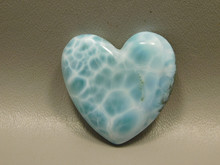
Recently I read that Larimar was a petrified wood. This shocked me as I sell Larimar, but never knew that and I decided to verify it.
Is Larimar a petrified wood?
Larimar was discovered in 1916 but not officially mined until 1974, it is found only in one place in the whole world, the Dominican Republic. In fact, Larimar is the only mineral actively mined in the Caribbean. Larimar is found only in the Dominican Republic because its formation required a rare combination of unique volcanic activity, specific hydrothermal chemical reactions, and the presence of copper (which gives it its blue color), this occurred in a single geological site above Barahona, near the Bahoruco River and the Sierra de Baoruco mountains.
It was named in 1975 by Miguel Méndez who combined part of his daughter’s name Larissa with “mar,” the Spanish word for sea. Larimar was declared the “national stone” of the Dominican Republic in 2011. In 2025, the country also received international denomination-of-origin registration for Larimar Barahona.
Larimar is actually a type of pectolite or a rock composed largely of pectolite, an acid silicate hydrate of calcium and sodium, and its rare blue color is from the presence of copper. Extraction is labor-intensive and still performed largely by hand in deep (about 300 to 900 feet deep!), narrow tunnels cut into steep tropical terrain.
Petrified Wood (aka Fossilized Wood) is formed when a tree died and was quickly buried by sediments. Minerals in the groundwater then permeated the wood, replacing the wood and actually turning it into stone. Sometimes even retaining all the original characteristics of the original wood.
So no, Larimar is not petrified wood, but there is actually a type of petrified wood called a petrified wood limb cast-a cavity left by wood that has rotted away, that is filled with rock. In the Dominican Republic, during the Miocene, tree limbs were encased in a pyroclastic flow that covered an ancient forest. The wood rotted away, leaving voids or limb-shaped molds, that were, over a long period of time, filled with the copper-rich hydrothermal fluids that crystallized, creating a Larimar limb cast or Xylolarimar.
The most valuable are the true limb cast with the characteristics of the original wood trunks, bark or limbs surrounding them.